PANCE and End of Rotation prep, built by a PA student.
Season One PA Exam Prep is a study app for physician assistant students. Board-style practice questions with a written rationale on every answer, a clinical reference library, and a medication reference, all working entirely offline.
Thanks. Your TestFlight invite is on its way.
That didn't send. Email [email protected] and we'll sort it out.
// Join the beta above and we'll email you the moment it lands.
What it looks like
One screen from each part of the app. Real screenshots, not mockups.
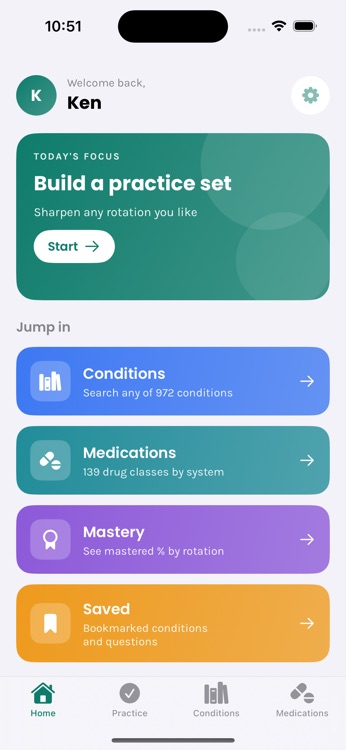
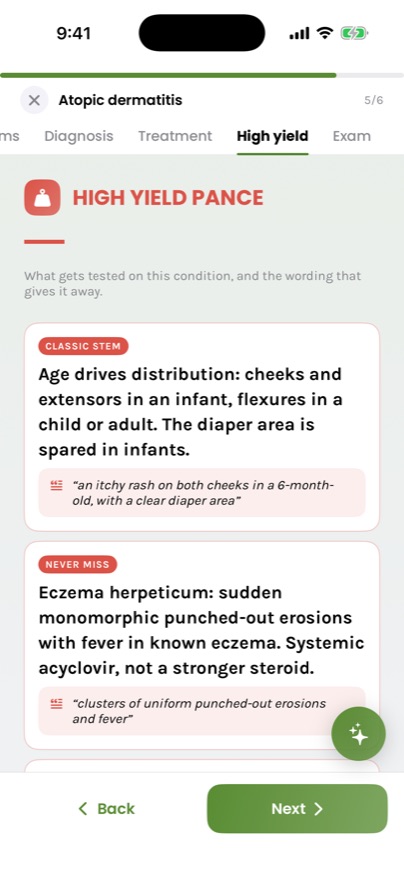
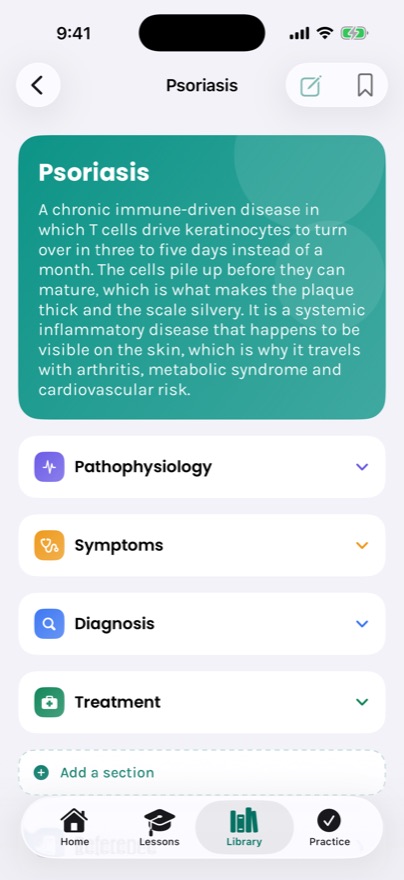
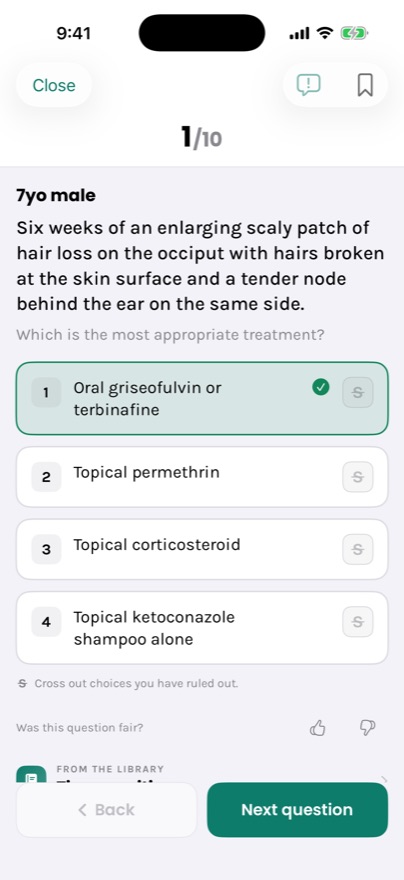
One library, all three years
Most prep is bought one exam at a time. Season One is the same library the whole way through, so what you learn in your first rotation is still there on exam day.
Didactic
While you are still in class
The condition reference and the lessons cover the same diseases the didactic year does. Read them alongside a module rather than waiting until boards, and the material is already familiar when the rotation starts.
Rotations
Six end-of-rotation exams
Every condition is placed against the rotation blueprints, so practice can be filtered to the rotation you are actually on. Family Medicine, Emergency Medicine, Internal Medicine, Pediatrics, Women's Health and Psychiatry are built. Surgery is not yet.
Boards
The PANCE itself
Nothing has to be re-bought or re-imported for boards. The same 1,900 questions and 962 lessons are there, and each lesson closes on what an item writer reaches for and the wording a question uses to test it.
FAQs
Questions students ask
Who writes Season One?
One PA student, currently. That is the whole answer, and it is deliberate. Every question, every rationale and all 962 lessons are written by someone sitting the same seven end-of-rotation exams and the same PANCE® — not adapted from a medical-school library and relabelled for PAs.
It also means Season One is small. If something is wrong, write to us and it gets fixed, usually the same week.
Is it useful before boards, or only at the end?
Before. The lessons and the condition reference cover the same diseases the didactic year does, so they are meant to be read alongside a module rather than saved for a cram. During rotations, practice filters to the rotation you are actually on. By boards, nothing has to be re-bought or re-imported — it is the same library you have been using for two years.
What makes it different from the other PA study tools?
Three things, honestly stated.
It works with no signal. The entire library, question bank and medication reference are on the device. No loading spinner in a hospital basement, on a plane, or in a rural clinic with one bar.
It is one library, not three products. Most prep is sold one exam at a time. Here, didactic, rotations and boards are the same content.
Every answer carries a written rationale — including why the wrong options are wrong, which is usually where the learning is.
Are the questions like the real exams?
They are board-style vignettes written against the published NCCPA® and PAEA® blueprints, and every condition in the library is mapped to the blueprint area it belongs to. Each lesson closes on what an item writer tends to reach for and the wording a question uses to test it.
To be explicit about what we are not claiming: these are not retired or leaked exam items, and no one at Season One has access to live examination content. Nobody outside the NCCPA does. Anyone telling you otherwise is either wrong or selling something they should not have.
Do I need to buy something separate for each rotation?
No. One library covers every rotation and the PANCE®. There is no per-exam Qbank to add, and nothing expires between rotations.
Six end-of-rotation blueprints are built today — Family Medicine, Emergency Medicine, Internal Medicine, Pediatrics, Women's Health and Psychiatry. Surgery is not finished yet, and we would rather say so here than have you find out during that rotation.
Can I use it alongside my Anki or Quizlet decks?
Nothing stops you, and most students run more than one tool. Season One has its own flashcards built in, including decks you can generate from a lesson you have just read.
There is no Anki import or export yet. If that is the thing that would make this fit your workflow, say so — it is on the list, and what people actually ask for is what gets built next.
Can I make it fit my own schedule?
Yes. Build a practice set filtered by rotation, by blueprint section, or from the questions you have missed. Add an exam with its date and the material it covers, and the app works out how many lessons a day that takes and holds that number steady as the day goes on.
You can also hand it a syllabus PDF and have it work out which lessons the exam covers, rather than ticking them off a list yourself.
What does it cost, and what if I do not like it?
Season One is free while it is in beta. No card, no trial countdown, and nothing to cancel. If it is not for you, delete it — there is no charge to reverse and no subscription running in the background.
Pricing will exist eventually. When it does, it will be published on this site with the refund terms stated on the same page as the price, and beta testers will hear about it from us before it changes.
What happens to my study data?
It stays yours. Your answers, scores, notes and highlights live on your device and sync through your own iCloud account to your other devices. We cannot read them.
If your program gives you access through Season One for Programs, faculty can see your progress — what you have completed and how you are pacing. They never see your notes, your highlights, your tutor conversations or your individual answers. The full detail is in the Privacy Policy.